
What do movies, video games, and escape rooms have in common—aside from interesting sets and stories? The answer is: quality audio! Escape room sound design is just as important as a well-built set when it comes to making the best escape rooms. Solid, engaging audio establishes the mood and keeps the players focused on the game.
There’s a saying amongst designers of all fields, “Good design is invisible.” In short, it means that something designed well doesn’t draw attention. Players might not pay much attention to escape room sound when it’s done well, but they definitely notice when it’s bad. Our goal is to design good sound that keeps players focused. Background music should stay in the background instead of distracting players. Sound effects should draw attention without throwing off immersion.
When talking about escape room sound design, “invisible” doesn’t mean that a soundtrack can’t be appreciated. Just think of how iconic the Star Wars soundtrack is; the first notes of The Imperial March tell us everything we need to know about Darth Vader. In this context, invisible design means that the design (or sound) feels natural in context. For example, we wouldn’t expect to hear a cheerful flute solo during an intense battle. It would stick out like a sore thumb. We don’t want players thinking, “This is some weird music.”
Escape room sound design is a pretty big topic, but it’s also a lot of fun. Today, let’s talk about the role that sound plays in our escape rooms. We’ll be answering two main questions: how do we choose the sounds and how do we incorporate audio into the games?

What goes into escape room sound design?
Finding audio that fits the mood, doesn’t draw attention, and creates a sense of urgency can be a complex task. It’s important to get our escape room sound design right so that the music won’t break immersion. For the most part, the audio should be subtle and believable. We also want to ensure that the music doesn’t distract or annoy players. The last thing anybody wants in a 2-hour escape room is to endure bad music that doesn’t even fit the theme! Because the sound is used for background music and gameplay elements, it’s bit more like designing audio for a video game rather than a movie.
Choosing the right music
One of the most important things in escape room sound design is making sure that the background music is appropriate. A dark, ominous theater shouldn’t have bright, fun piano music. An ancient Greek temple should not sound gloomy and haunted. So, when picking what songs to play, there are a few questions that need to be answered:
- Does the song fit the theme of the room? If the music doesn’t sound like it could belong in, for example, Victorian London, it’s thrown out right away.
- Does the music set the appropriate mood? This could be playful, light, heavy, mysterious; the emotional aspect matters just as much as the theme.
- Does the music loop nicely in the background? People don’t typically write songs that will play for hours on end, and players won’t feel comfortable spending so much time in silence. To fill in the background, we’ll have the song replay. If the end of the song and beginning don’t flow together neatly in a loop, it’s not a good fit.
- Is the music at a consistent volume? You might be surprised to find that some songs have drastic volume shifts in the middle of the track. Shifts from near-silence to blaring loudness don’t work very well for escape room sound design. It takes players right out of whatever they’re doing.

These are the most basic questions for choosing music for escape room sound design. We go through them for every song that we pick in each room. We’ll often start with a large assortment of different songs that sound believable. From there, we narrow down the list. After picking only what meets the basic requirements above, there are still other considerations. Since each escape room uses multiple songs, we also need to determine which tracks sound good together. We don’t want a jarring transition from one song to the next.
Escape room sound design isn’t exactly a precise art. Sometimes, the differences between two perfectly suitable tracks are very subtle. One might be melodic and sad while the other is melodic and dour. What’s the difference? It’s hard to put into words when listening to the songs. When that happens, it can be difficult to choose between one or the other. The final decision might come down to one song feeling slightly better.
Feelings aren’t quantifiable, but it’s important to capture the right mood for the background music. The little nuances can make a big difference when it comes to escape room sound design.
Choosing sound effects
A lot of the same questions that we have for music are asked for escape room sound effects. The sound effects need to match the room’s theme, they can’t be jarring, and they need to suit the mood. We also need to determine how the sound effect will be used in the escape room. Will this sound be triggered when the player opens a door? Will it be used to tell them that something was revealed? Is the sound part of an audio sequence that contains a voice track? There are many ways in which a sound might be used.
Knowing how the sound effect will be used is critical. We don’t want to pick a sound that will drown out an accompanying voice if it’s used alongside narration. It’s also important that it doesn’t drown out the sound of whatever we’re drawing attention to, like if a secret panel is opening.
However, there are a few things we can ignore when choosing sound effects. We don’t need to worry about looping the track since it will only need to play once. Volume is also less of an issue. Since it’s a small, local effect, it’s sometimes a good thing if it changes pitch or gets louder suddenly. We also have the ability to adjust the volume to suit a prop that it might be used for.
Putting it together
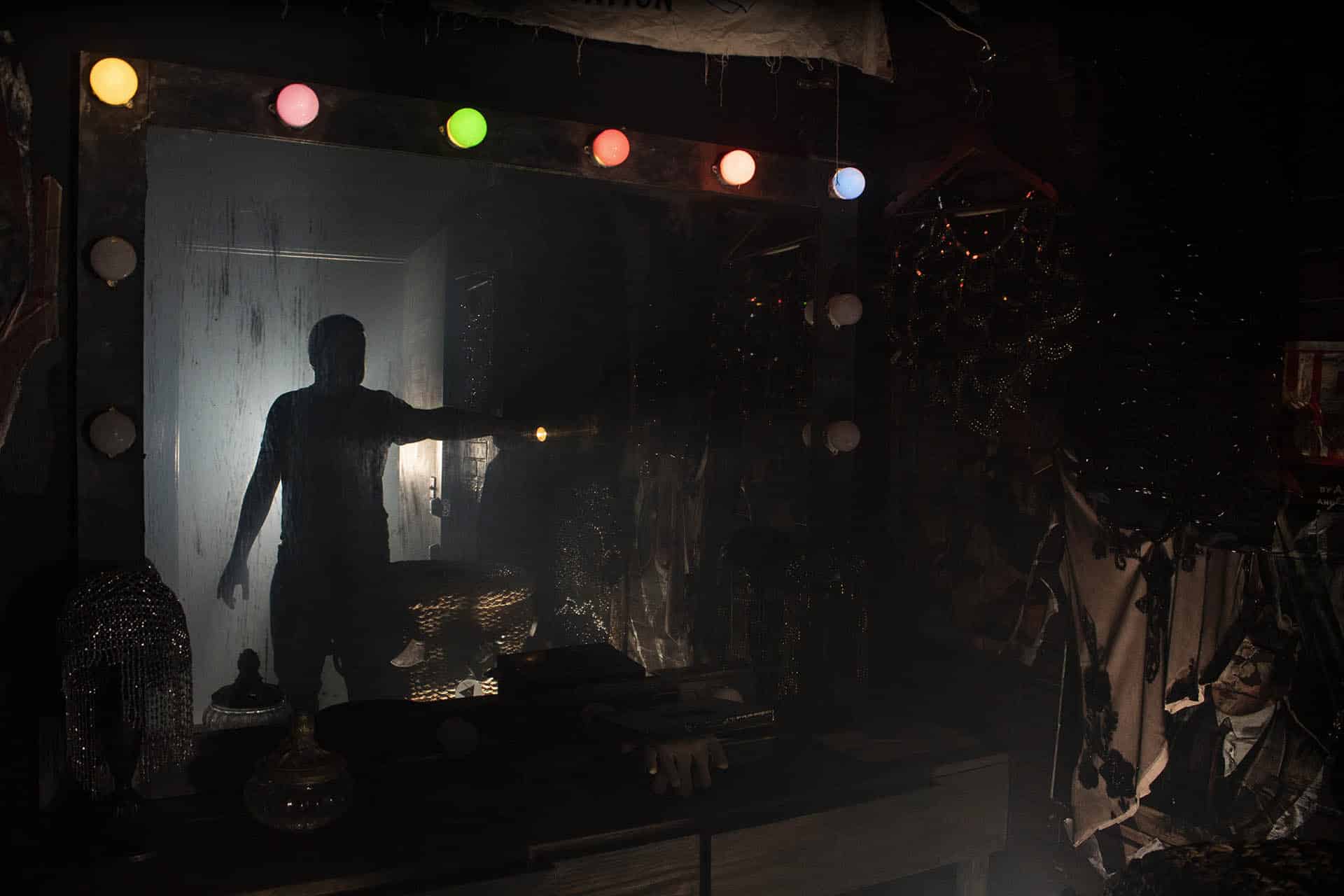
Once we’ve selected our music and sound effects, it’s time to put everything into the game! The next phase of escape room sound design requires us to get the room itself set up. Speakers need to be positioned in the room. Wires have to be connected to everything and tucked out of sight. Music and sound effects need to be cued up to play at the right times. Once the components are all in place, we can start testing the game to make sure everything sounds right.
Setting up audio for a smaller prop is a little easier. The cables and speaker are all in the same place, so we don’t need to go from room to room testing things with it. We can load the audio files directly into the device, turn it on, and check the escape room sound quality and volume. If there’s code involved in triggering the sound, we’ll be able to tell if the program is working properly. It’s always fun to see when everything comes together!
During a test run of the game, we might realize that some escape room sounds are too loud or too quiet. If that happens, we’ll adjust the audio levels and do another test. We’ll fiddle with the volume of any audio-based props to make sure players can hear them in the game itself. Once everything sounds good, it’s time to move on.

How The Escape Effect uses audio
We use sound in many different ways here. Not including the audio used in our introduction videos, the basis of escape room sound is in the background music. As soon as the game begins, the chosen track will play. This background music is only the beginning! Over the course of the game, players will encounter many other sounds and effects—and they might not even realize it. Different sounds will be triggered for many events.
Counting down the time
Our games may be longer than usual, but that doesn’t make time any less of a concern for players. There’s a lot to look for in the escape rooms, and many puzzles to solve. Time can fly by before you even notice. That’s why we’ve added a little something to the background music to keep everyone on alert. Over the course of the game, the music will gradually become more intense.
Think of the music like a 15- or 30-minute warning. At the designated time, our game switches over to the next ambient track. The closer the timer gets to 0, the more intense the music. Some of our players will notice this and warn their friends, “The music just changed!” Even if they don’t notice right away, the intensity of the music means the pressure is on. Much like with dramatic music in a movie, this little cue adds to the excitement.
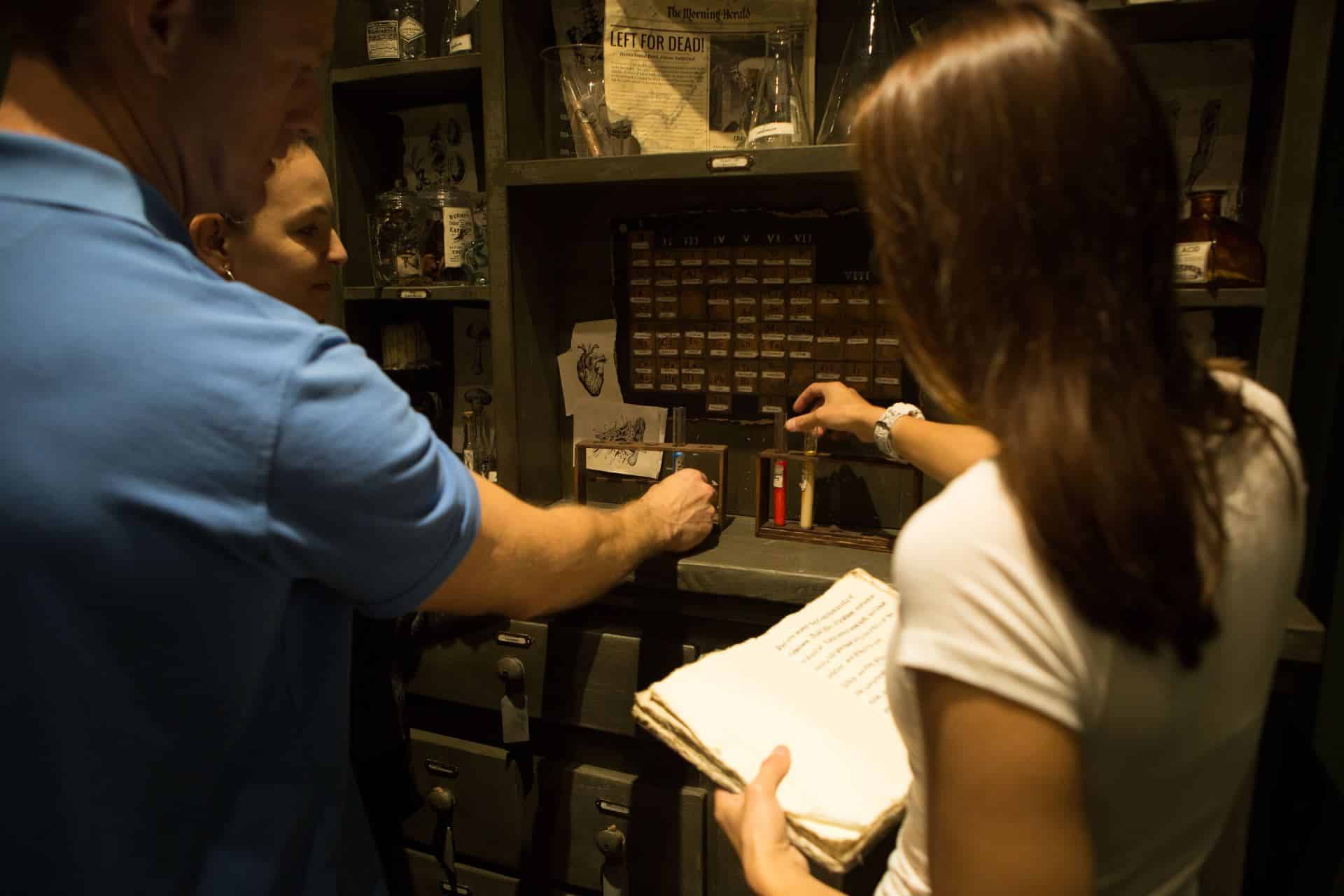
This is why it’s so important to choose songs that loop and flow well together. Each song might play for up to half an hour, so it can’t be tiring to listen to. If the songs don’t flow from one to the next, the transition will be unpleasant and take players out of the game. A smooth transition can still be noticeable, but in a fun way. Instead of confused players asking why the music changed, the astute ones realize that time is running out.
Some people go through the entire game without realizing that the music changed. That isn’t a bad thing at all. As we said before, good design is invisible. Good escape room sound design doesn’t need to draw attention to itself. If players don’t notice that the music changed, it means they’re able to focus on the game. The subtle touch of ramping up the intensity should never distract from the fun.
Creating audio feedback
One of the most fun escape room sound effects that we use is fanfare in A Knight To Escape. This friendly little song plays at certain points throughout the game. When players complete specific puzzles, they hear the victorious brass music. The fanfare is used to let the players know that they’ve solved the puzzle. It’s loud enough to catch their attention, and the bright music reaffirms that they’re on the right.

Not all puzzles will trigger this audio feedback. The reason for that is, not all puzzles need it. So, how do we determine which puzzles get the audio feedback? The method is pretty straightforward. If the puzzle doesn’t give an obvious, in-your-face result, players might not find it easily. Opening a lock is straightforward. Opening a secret compartment isn’t always as obvious. Even if something drops and clatters on the floor, an excited group can overlook whatever fell. That’s when we bring out the music.
In A Knight To Escape, specifically, many of the puzzles are low-tech. We use a lot of old-fashioned locks and sturdy wooden props. When players solve puzzles and open padlocks or chests, they have a clear end point. The lock opens and they can move on to the next phase. Puzzles like that don’t need a celebratory toot.
However, there are other puzzles that rely on different mechanics or tricks in order to reveal hidden secrets. When something is triggered for one of those puzzles, we’ll cue the fanfare. This little escape room sound effect is a bit louder than the background music. It lets players know that they’ve done everything they needed to there, and it’s time to find what they revealed.
Special effects
Escape room sound effects have a variety of other uses. Rather than telling players that the puzzle was solved, some of the sounds might be used as signal on a key prop. Others might be used as a clue, and more can add some realism to an interactive object. We can have the players trigger the sounds when something happens. We can also set them up to play automatically when specific conditions are met. However the effects are triggered, they need to be loud enough for the players to hear them and appropriate for the setting.
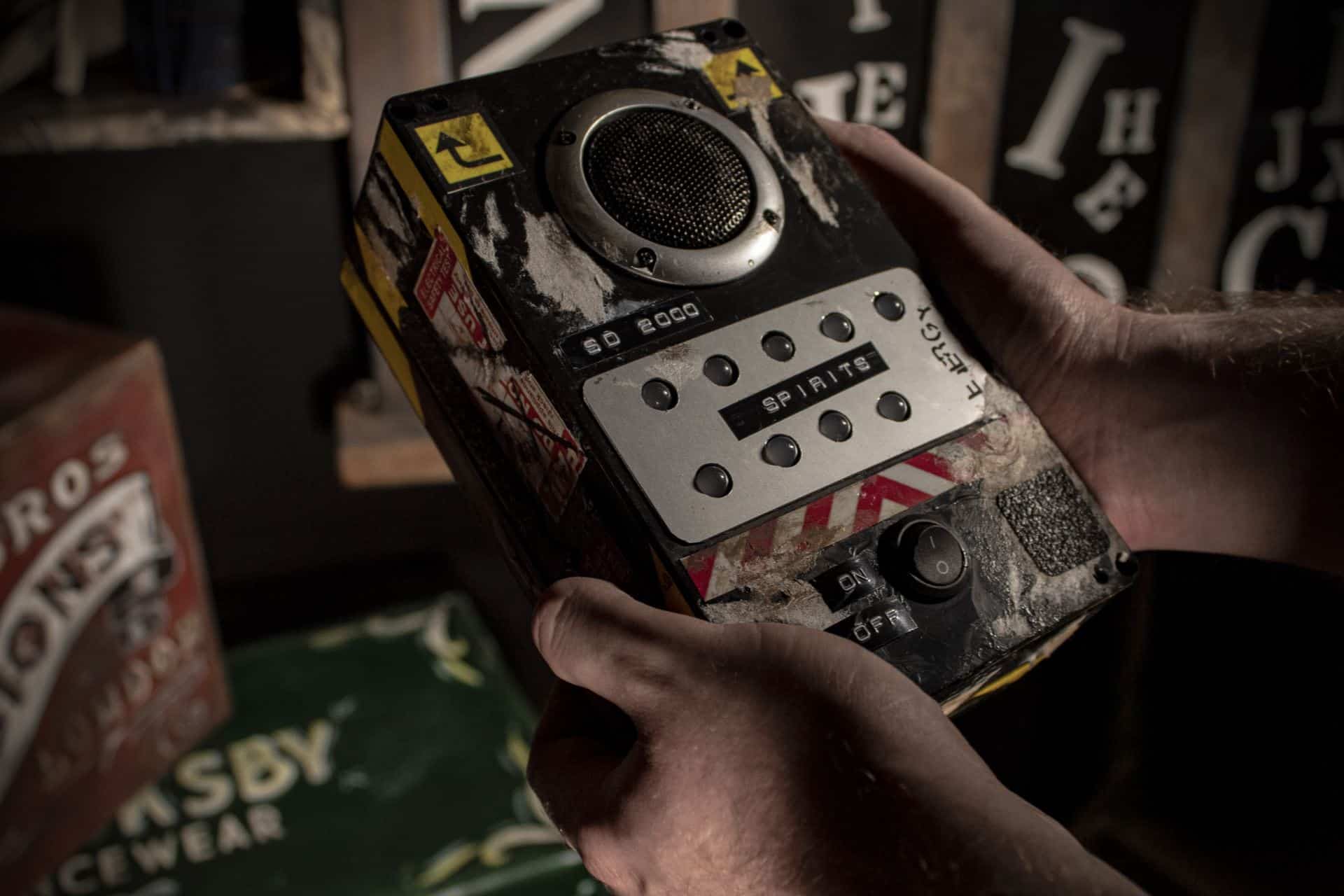
In Fright Before Your Eyes, we have two notable props that rely on audio: the SD2000 and the audio/video (A/V) panel. Both of these props rely heavily on good escape room sound design, along with clever electronics that cue up the right sounds at the right time. Players will trigger the sounds from each prop in order to uncover clues for the escape room.
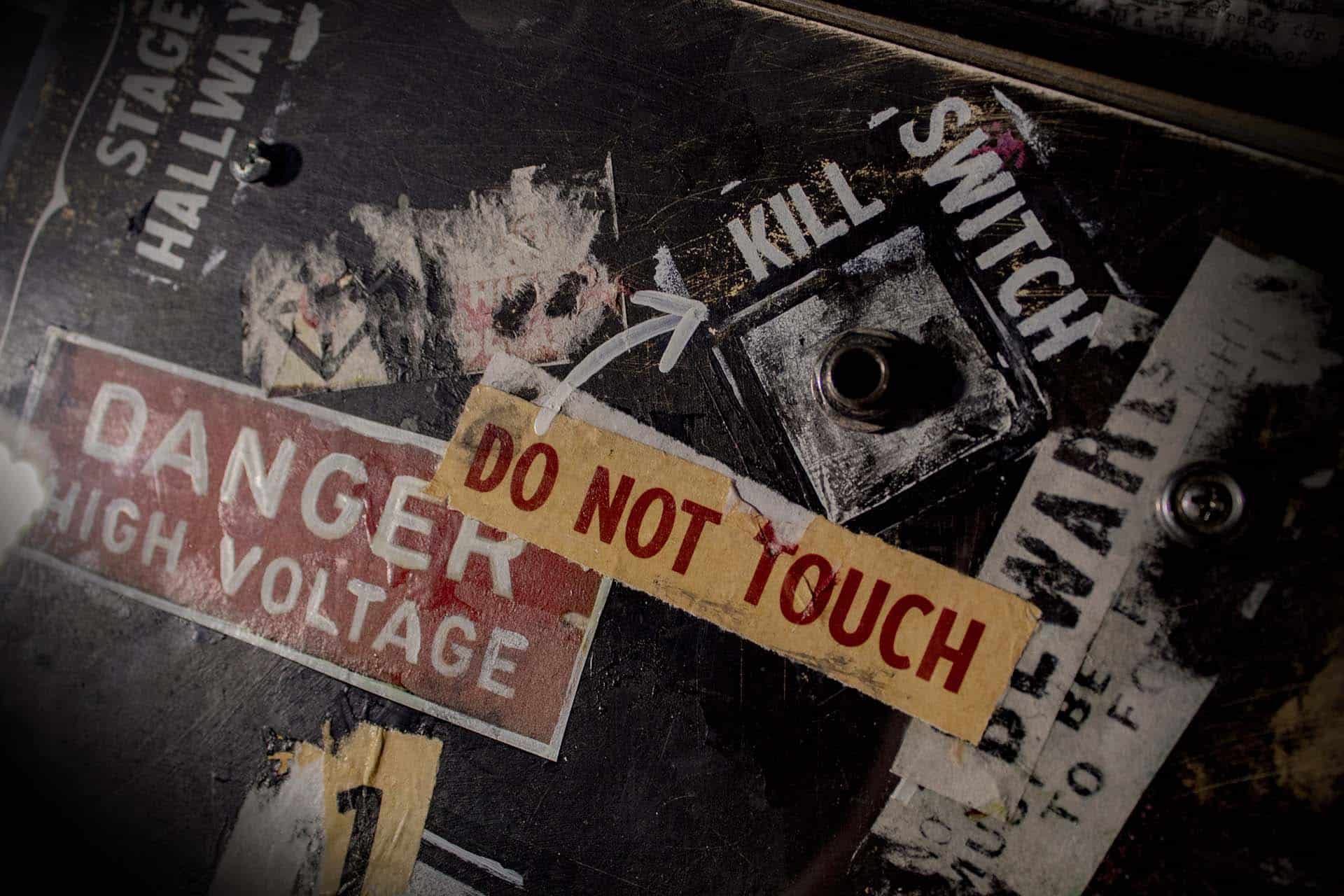
The A/V panel is modeled after theater A/V panels. Over the course of the game, players will be able to use it to trigger a variety of different effects. Some of them trigger lights, while others feature different effects. In most cases, the effect comes with an audio cue. When players hear the sound, whether it’s a mechanical THUMP or an electronic buzz, they know something happened. They can look around the room to find what changed and uncover the next clue. Once they have the clue, they can move on to the next part of the game.
In the case of the SD2000, the sound effects are more straightforward. The device is will play a sound when turned on to tell players that it’s working. It has different sounds that will play when it’s activated, and it delivers audio-based clues to the players. Everything the players need to learn from the SD2000 will be on the device itself, rather than elsewhere in the room.
These are just a few ways to use escape room sound design to create fun results. There are many different effects in each of our escape rooms, all intended to give players the information they need in a fun way. The variety and range of these effects keeps our games feeling fresh and immersive.

An immersive multimedia experience
A lot of work goes into escape room sound design. From picking the right sounds and making edits, to getting the audio hooked up into the escape room, there are many details to get right. Little mistakes in setting up the speakers could create unpleasant feedback. Low-quality files can make the sound come out tinny. Volume control issues will either make the sound inaudible or painfully loud. Fine attention to detail is needed to get the best sound quality possible into our escape rooms.
The most important thing with escape room sound design is ensuring that everything works with the game. As important as the audio is, it’s not good enough on its own. The set has to be appropriate for the theme of the room, from floor to ceiling. Props need to be well-designed and functional. The puzzles need to be fun and flow properly from one to the next. All of these, combined with top-quality sound, come together to make a cohesive escape room experience.
Getting all of these right is just one more reason why The Escape Effect was voted the #1 Entertainment Experience!
Experience Escape Room sound design
Step into our games and see for yourself what good escape room sound design is like. Our music and effects will keep you immersed in some amazing games!
